
Our approach equips Champion Farmers with resources, skills, and support they need to succeed independently while strengthening their impact within their communities. Each of these key elements is designed to support their journey.
Champion Farmers include women who have graduated from the Farming Collective, as well as other skilled men and women from the community who are ready to farm independently.
Through partnerships with NARO, Champion Farmers receive advanced training in crop agronomy, equipping them with the expertise needed to excel in modern, sustainable farming.
Unlike farmers in the collective, Champion Farmers do not rely on direct resources from COFIA. Instead, they access microloans to procure essential inputs such as seeds, fertilizers, and tools for the farming season.
COFIA purchases their harvests, ensuring fair pricing and a reliable market for their produce.
Champion Farmers benefit from ongoing extension services, receiving advice and support throughout the growing season.
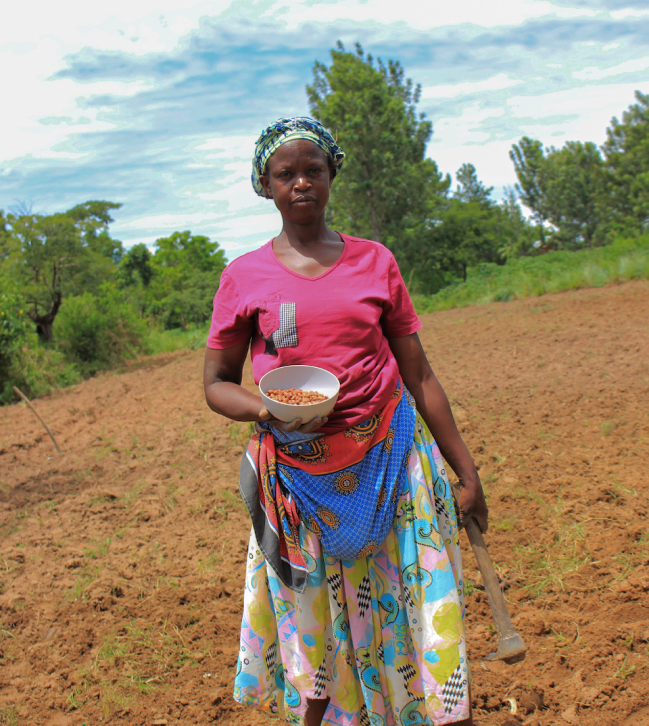
Champion Farmers serve as role models, demonstrating the possibilities of sustainable, market-oriented farming.
By farming on their own two acres, these farmers showcase the confidence and skills gained through COFIA’s programs.
Their advanced expertise allows them to mentor others, amplifying the impact of COFIA’s work across their communities.
The success of Champion Farmers contributes to improved household incomes, stronger local economies, and greater food security.

Meet Florence Magali from Magola village, COFIA Champion Farmer and groundnut powerhouse. In this video, she’s busy in her g.nut garden planting Serenut 14, a climate-resilient, disease-resistant variety from NARO.
Florence shares how COFIA training, especially the line planting method, has made her farming easier and more productive. She’s now expecting a whopping 25 bags of harvest this season—a huge leap from the 1–2 bags that used to be common in the area.
With her eyes set on supporting her family and keeping her kids in school, Florence is showing what’s possible when farmers have the right tools, training, and a little extra sunshine.